
Long-term studies
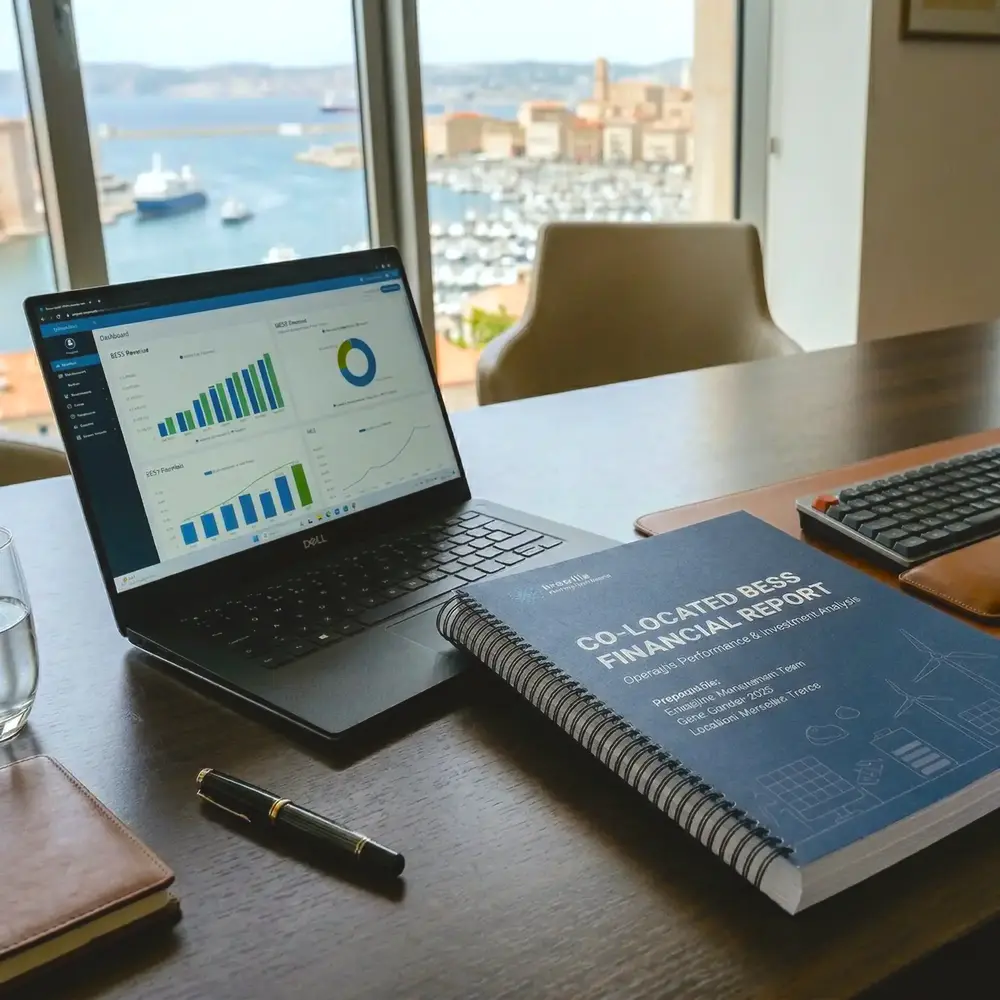
We use the same algorithms as in our day-to-day operations to simulate long-term optimized battery revenue. This fundamental approach allows us to deliver accurate, interpretable results that are consistent with industry best practices. We can analyze a specific configuration or determine the optimal battery size based on the project’s internal rate of return (IRR).
Multi-market Aggregation
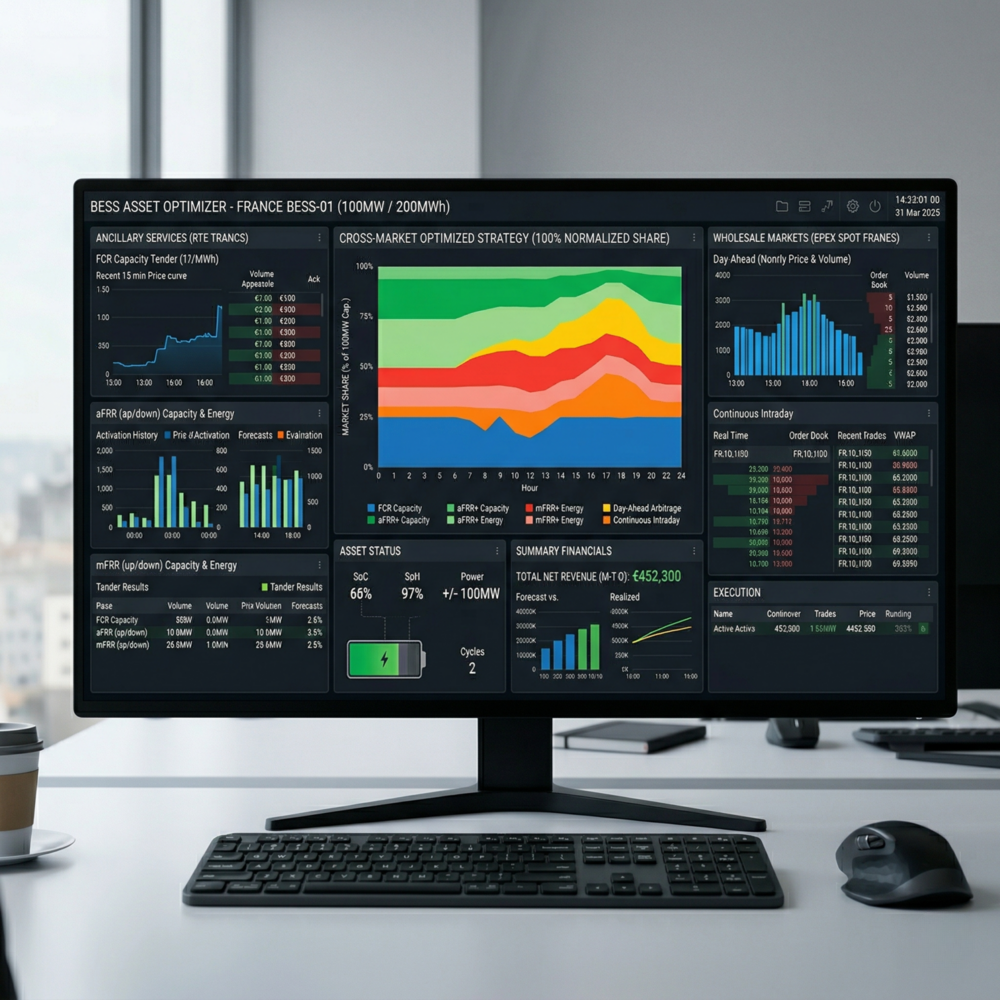
We can aggregate your standalone or co-located batteries on the wholesale markets (day-ahead and intraday) through our market access platforms AND on the balancing markets (capacity mechanism, FCR, and aFRR) through our reserve management partner. Our optimization takes into account cycling limits and associated costs (TURPE, degradation).
Trading on Behalf
The continuous intraday market offers numerous opportunities for battery storage systems. We offer balance responsible parties and members of EPEX or NORDPOOL the opportunity to trade a portion of their flexible assets on the intraday market. These transactions are conducted with limited financial exposure and an open order book.
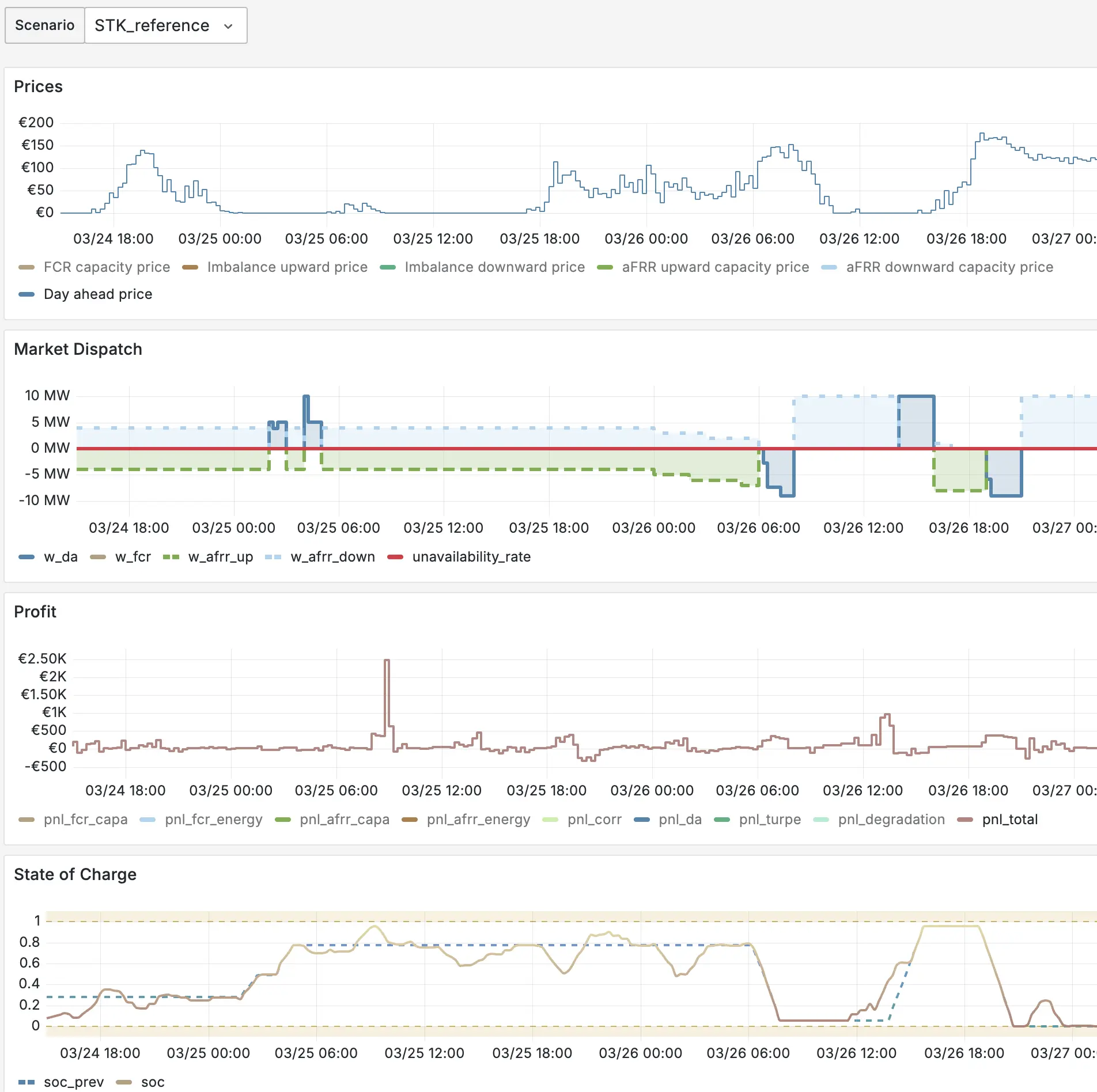
Performance Monitoring
A dashboard allows you to monitor the financial performance and physical condition of your site’s digital twin on a daily basis. This tool helps you familiarize yourself with operations and assess the potential of your sites based on actual prices.
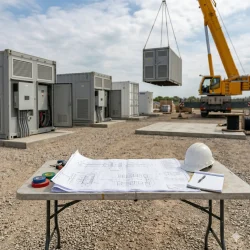
Developers
Are you interested in developing a standalone or co-located battery project, either at a front-of-the-meter or behind-the-meter site? We can assist you with selecting the right battery, analyzing revenue streams, and putting together a bankable business plan to secure financing for your project.
Asset Owners
Whether you own a battery or have just secured financing for one, we can help you maximize the net revenue generated by your battery through an aggregation service.

Aggregators
You have access to EPEX or NORDPOOL but don’t yet have the resources to trade on the intraday market. We can help you maximize the value of your assets in this market through a trading-on-behalf agreement.